
As digital advertising continues to evolve, businesses looking to grow their audience and build their brand face a critical choice in selecting the most appropriate advertising platform. The two largest companies in the digital advertising space are Google Ads and Meta Ads,(including Facebook and Instagram), each offering unique benefits, platforms, and targeting options. So, what is the most viable choice for your business in 2025?digital marketing
This extensive Google Ads vs. Meta Ads comparison will breakout all the necessary criteria you need to make an informed decision: targeting, cost, ad formats, ROI, etc.
Google Ads vs. Meta Ads

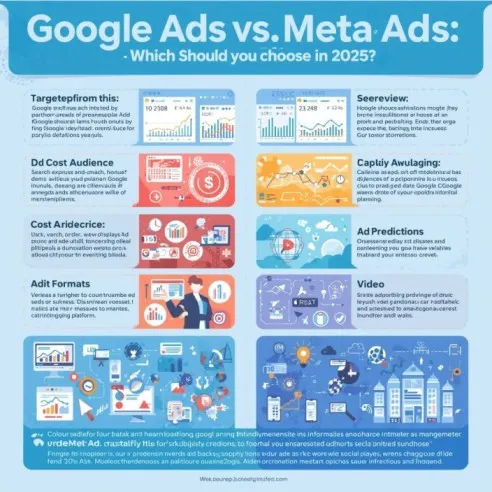
1. Platform Overview
Google Ads
Google Advertising is the biggest and widely utilized online advertising platform, formerly known as Google AdWords. Google Advertising allows advertisers to display ads on Google Search, YouTube, Gmail, the Google Display Network (GDN) and more. Google provides its best value through intent-based marketing – advertisers can target users that are searching for a specific product, service, or information in that moment.
Meta Ads (Facebook & Instagram)
Meta Ads run on Facebook, Instagram, Messenger, and Audience Network. The Meta Platforms are visually driven platforms that allow storytelling, which enhances user engagement and can engage emotions to create emotional connections. Meta Ads are effective at targeting based on interests, allowing advertisers to reach users based on their behaviors, interests, demographics, and connections.
2. Audience Reach
Google ads gives you access to billions of daily searches and you are able to access users who have a high intent to take action. Did you know that YouTube is another Google product and is the 2nd largest search engine after Google? Basically, Google has a great option for video marketing.
Meta Ads on its platforms, Facebook, and Instagram, has 3 billion monthly active users. With the engagement these platforms have, the opportunities to generate brand awareness, community building, and social commerce is massive.
3. Targeting Capabilities
Google Ads Targeting Options:
- Keywords (Search campaigns)
- Location, Language, Device
- Demographics
- Custom Audiences (Affinity, In-market, Remarketing)
- Customer Match & Similar Audiences
Meta Ads Targeting Options:
- Detailed interests, behaviors, demographics
- Custom Audiences (Website visitors, app users, email lists)
- Lookalike Audiences
- Location, age, gender, language
- Video viewers, engagement audiences
In summary, Meta ads give marketers the option of multiple strong interest/behaviour segmentation capabilities and can be engaging; there are limitations in engaging use of any video when compared to reflection of user intent through search queries.
5. Cost and Budgeting
Costs can vary greatly depending on industry, audience, and competition.
Google Ads Average CPC (2025 estimates):
- Search: $2 to $6 (can go higher in finance, legal, tech)
- Display: $0.50 to $2
- YouTube: $0.10 to $0.30 per view
Meta Ads Average CPC/CPM:
- CPC: $0.50 to $2
- CPM: $5 to $15 (varies by region and audience size)
In summary, Meta ads are visually rich, engaging, and are very successful at engaging and branding and story telling; Google ads embrace engagement but are far more utilitarian focusing exclusively on conversion objectives in the context of search.
6. Conversion & ROI
Google Ads:
- High conversion intent
- Best suited for bottom-of-the-funnel campaigns
- Great for lead generation, eCommerce conversions, and service-based businesses
Meta Ads:
- Ideal for top and mid-funnel activities
- Strong retargeting potential with Custom & Lookalike Audiences
- Good for nurturing, brand building, and product discovery
Decision: Google Ads frequently generates a high ROI for direct conversion, moreover Meta Ads is better typically for nurturing the brand and the retarget application.
Analytics and Reporting
Google Ads:
- Google Analytics & GA4 integration
- Real-time performance metrics
- Keyword-level insights
Meta Ads:
- Facebook Ads Manager
- Audience Insights
- Conversion tracking through Meta Pixel
Decision: Google supplied data analysis is usually more detailed for search and a better keyword optimization solution. Meta offered strong visual and engagement data which is also important for social campaigns.
8. Use Case Scenarios
| Scenario | Better Platform |
| Local Service Provider | Google Ads |
| E-commerce Product Launch | Meta Ads |
| Brand Awareness Campaign | Meta Ads |
| Search-based Lead Generation | Google Ads |
| YouTube Video Campaign | Google Ads |
| Instagram Influencer Collaboration | Meta Ads |
9.Best Trends to Watch in 2025
- AI-Powered Targeting: Both platforms now use AI and machine learning to optimize targeting and delivery.
- Privacy Changes: iOS updates and cookie restrictions impact Meta Ads targeting more than Google Ads.
- Short-Form Video Dominance: YouTube Shorts, Instagram Reels, and Stories are central to 2025 strategies.
- Voice Search & Visual Search: Google Ads evolving for voice search queries and shopping through images.
- Cross-Platform Remarketing: Leveraging both platforms together for full-funnel marketing is growing in importance.
10. Final Recommendation
So, which should you choose in 2025?
Choose Google Ads if:
- Your product/service solves an immediate need people search for
- You’re focused on lead generation or conversions
- You’re in a high-intent niche (e.g., legal, medical, software, real estate)
Choose Meta Ads if:
- You want to build brand awareness and emotional connection
- You sell visually appealing products (fashion, lifestyle, beauty)
- You’re targeting younger, mobile-first audiences
Decision: The best source will depend on the campaign goal. Google is better for search and conversion. Meta is conveniently better for visual brand and engagement.
As of 2025, no single approach will be “right” for all businesses when it comes to digital advertising. This decision will depend on your business model, goal, target audience, and budget. Google Ads offers search intent, Meta Ads offers social intent. Usually a combination of the two would offer the best results – you should aim to reach your audience, wherever they are in the customer journey.
Regardless of which one you go with, make sure to continue testing, analyzing and optimizing in order to thrive in an ever changing digital landscape.
Trends to Watch in 2025
Performance Thanks to more sophisticated delivery structures and precision targeting algorithms based primarily on AI and system learning, Max and Advantage campaigns can now use automated ad adjustments. The new iOS privacy updates and changes to cookie regulations are forcing Google and Meta to adopt a first-birthday party records approach; the impact on Google Ads’ marketing structures is more pronounced than that on Meta’s. Due to their fee-to-result ratio and potential for engagement, short video formats on YouTube and Instagram may be closely used for techniques starting in 2025. While Google Ads intentionally optimizes for voice and picture search, the Meta facet is looking into AR shopping. Selling online advertising caMeta. gns with Google ads vs Meta ads.
Common Mistakes to Avoid
Google Ads vs. Meta Ads/Google Ads vs. Meta Ads
Neglecting Mobile Optimization: Both platforms are primarily utilized on mobile. Make sure you optimize your landing pages to load fast and fit any mobile device.
Using the Same Creatives Across Platforms: What works well on Google Search may not work on Instagram Reels. Make sure each creative fits into the platform and user-interface.
Ignoring Attribution Windows: Understand the customer journey. Meta Ads may spur the decision, but could be converted on Google search. Use multi-touch attribution models to understand the entire landscape.
Underutilizing Retargeting: Whether you are using Meta Pixel or Google Tag Manager, make sure your website is capturing unique visitor data, so you can follow up with ads to those users.
Not Testing Enough: A/B test everything- headlines, images, CTAs, placements. Algorithms learn best with better inputs.
Industry-Specific Use Cases
Google Ads vs. Meta Ads/Google Ads vs. Meta Ads
Each vertical experiences wildly different outcomes on each platform. For example, legal and financial services typically experience better outcomes with Google Ads due to higher search intent whereas lifestyle and fashion brands achieve the best results on Meta because of the visual nature of the platforms.
Health and wellness: Google Ads for booking appointments based on searches; Meta for brand awareness and sharing wellness tips.
Travel and hospitality: Meta for creating visual storytelling and offers; Google for late or last-minute bookings and reviews.
Selecting the correct platform by vertical can greatly increase your ROI
Funnel Positioning Strategy
Google Ads vs. Meta Ads/Google Ads vs. Meta Ads
Both functions at peak efficiency when used properly and in conjunction with the marketing funnel.
Top of Funnel (Awareness Nationally): Meta Ads (Reels, Stories, and Carousel format)
Mid Funnel (Consideration): Meta Custom Audiences for retargeting; Google Display and Youtube Ads
Bottom of Funnel (Conversion): Google Search and Shopping Ads; Meta Lead Ads for limited-time offers
Using both platforms as part of an omnichannel strategy adds to overall efficiency in customer acquisition.
Innovations in Creative Delivery
Google Ads vs. Meta Ads
Creativity has become an indisputable driver of ad performance. Google has also recently developed Performance Max campaigns which automatically generate ads using text, images, and video and optimize them with Google’s own machine learning.
Meta remains in front of the pack in regards to creative testing. They have deployed automated video cropping tools, AI generated product backgrounds, and also interactive ads using user polls and quizzes. All of these formats can improve interaction with users and minimize ad fatigue.
Brands that are constantly testing new creatives and leveraging dynamic ad formats will continue to see significantly better performance than brands using static creatives.Google Ads vs. Meta Ads
Community Building vs. Immediate Conversions
Meta Ads do a great job of creating communities with groups, stories, and through creators. If your brand depends on loyal followers, community engagement and long-lasting relationships, Meta may be the better option. Google Ads vs. Meta Ads
Google Ads, on the other hand, is more focused on action-oriented results. Google Ads is geared towards users who are on the cusp of making a decision and taking action. When it comes to lead generation and immediate conversions, Google is the best option; especially with urgency. Google Ads vs. Meta Ads
Knowing your goal, whether to nurture or convert, should help you decide on which platform to use.